Make Your Images Pop with Complementary Colors

Chosen theme: Using Complementary Colors for Impactful Images. Discover how opposite hues create instant drama, guide attention, and add storytelling power—so your photos, designs, and visuals feel bold, intentional, and irresistibly memorable. Subscribe to keep learning actionable color magic.

The Color Wheel: Opposites That Spark Visual Energy

Start with foundational pairings: red–green, blue–orange, and yellow–purple. These opposites amplify each other, creating vibrant tension. Use one as the star and the other as support to avoid visual shouting and maintain intentional, eye-catching impact.

The Color Wheel: Opposites That Spark Visual Energy

Our eyes love contrast. Opponent-process theory explains why complementary colors heighten perception and focus. Place opposites side by side to energize edges, clarify subject, and create depth, helping viewers understand your story at a single glance.

Composing with Contrast: Subject, Background, and Balance

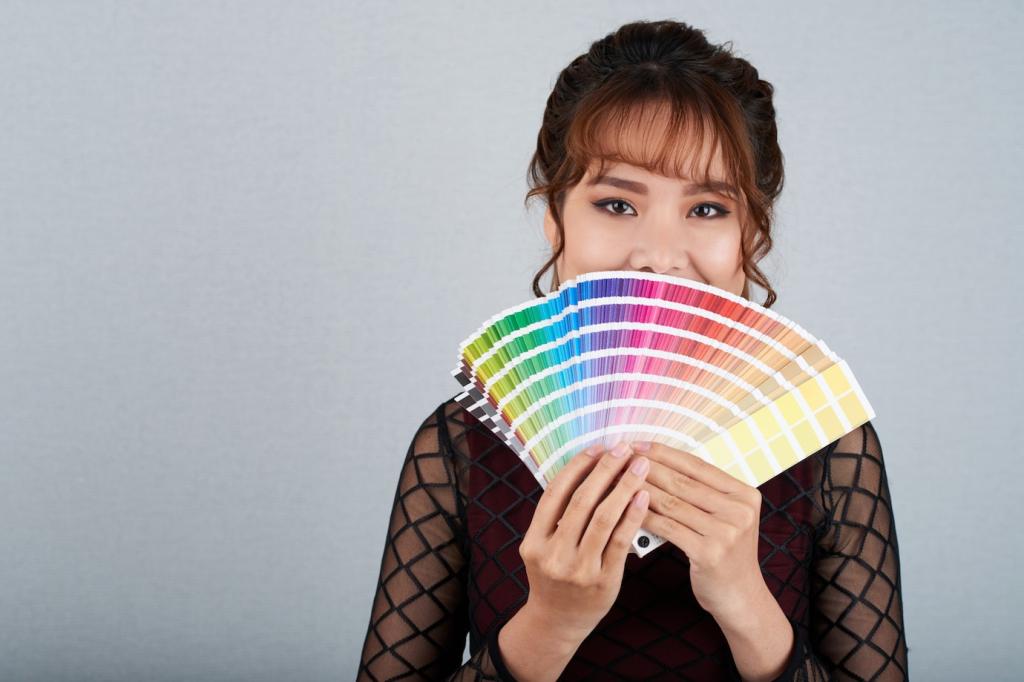
Pick one color to lead and one to accent. A helpful starting ratio is 70/30, preventing noisy competition. Try a largely cool blue scene with a small orange point of emphasis, then share your favorite ratios with the community.

Field Guide for Photographers: Finding Complementary Scenes

Blue–Orange at Golden Hour

Warm sunlight against cool shadows is a ready-made complementary gift. Emphasize it by nudging white balance warmer, or use an orange gel to enrich foregrounds. Test both approaches at sunset and share which settings produce your favorite glow.

Red–Green in Nature and City

From fresh produce markets to ivy-covered brick walls, red–green appears naturally. Avoid holiday clichés by varying texture, scale, and light direction. Try isolating a single red subject against layered greens, then post your results and tag your favorite technique.

Wardrobe Meets Location

Plan outfits to complement locations. A purple jacket against a mustard wall or orange scarf in a blue-tiled station makes instant impact. Build a quick mood board, scout backgrounds, and comment with your best wardrobe–location matches for the week.

Editing for Impact: Subtle Grading, Big Results

Use HSL to gently shift hues and tighten complementary pairs. Mask your subject to protect skin tones, and use selective color ranges for surgical control. Save side-by-side versions and tell us which micro-adjustment immediately improved clarity and mood.

Editing for Impact: Subtle Grading, Big Results

Lift highlights toward orange and cool shadows toward teal or blue for a cinematic complementary feel. Use RGB curves or color wheels sparingly. Keep midtones neutral to avoid color cast creep, then share your favorite balance for candid portraits.

Emotion and Story: What Complementary Pairs Convey

Orange whispers warmth and approachability; blue suggests distance and calm. Together, they frame human stories beautifully. Picture a glowing café against a cool evening street. Use this tension to underline contrast in mood, and share your own narrative pairings.

Emotion and Story: What Complementary Pairs Convey

Color meanings shift by culture and setting. Red may signal luck or danger; green might signal growth or caution. Research your audience, test interpretations, and tell us how context shaped your complementary choices in travel, documentary, or brand projects.

Mistakes to Dodge and How to Fix Them

It’s easy to overcook complementary pairs. Dial back vibrance, and let only one element shout. Test prints often reveal issues that screens hide. Share a rescue story where restraint transformed a chaotic frame into a confident, striking image.
Complementary color plus competing patterns can overwhelm. Simplify the background, blur with a shallow depth of field, or control texture with light. Post a comparison showing how a cleaner backdrop let your complementary subject breathe and truly command attention.
Color-blind viewers may miss hue contrast, so ensure luminance contrast too. Strengthen edges, adjust brightness, and avoid relying purely on hue. Share your favorite accessibility tools and encourage peers to test their images for inclusive, complementary clarity.

Practice Challenges and Community

Each day, chase a different pair: blue–orange, red–green, yellow–purple, and creative variations. Post your results, describe your choices, and cheer others. Subscribe to receive prompt lists and weekly critiques that sharpen your color instincts.

Practice Challenges and Community

Take an older image and regrade using a deliberate complementary strategy. Explain your edits, what you protected, and where you enhanced contrast. Your journey helps others learn, so add your process notes and invite thoughtful questions and discussion.
Pawzitrack
Privacy Overview

This website uses cookies so that we can provide you with the best user experience possible. Cookie information is stored in your browser and performs functions such as recognising you when you return to our website and helping our team to understand which sections of the website you find most interesting and useful.